Showing posts with label Romania. Show all posts

Tuesday, July 31, 2012

Vama

From day one the words were whispered through the training site halls.  Those volunteers who had been here some time, who had traveled the country, who knew most of the other volunteers, were uttering the phrase.  It could have either been the making of plans or the envious gossip but for a trainee just entering the country the words "Vama Veche" held a mystery and excitement in those first weeks of summer 2009.  The mystery remained as so until last weekends long awaited jaunt to the seaside.

Over the past three years I've heard many mixed feelings about the beach-town Vama Veche but the opinions started flying from the very first week in the country when some group 25 volunteers were planning a repeat trip to the southern most village in Romania.  "O Vama's crazy" they would say as I began asking about it.  "What happens in Vama stays in Vama," they said as they continued to tell me their stories that probably should have been forgotten on their long road out of the sea-side village.  Either way I had to find out more and after asking several people about it I continued to receive conflicting reports:  "It's a rocker beach", "It's a hippie beach", "It's a nudist beach"; "It's too commercial now", "It's not commercial yet"; "you must go there", "you don't want to go there".  It wasn't until recently that I realized the main deference between those reports that I was hearing: 100% of the positive opinions about vama veche came from people who had been there while nearly 100% of the not so positive comments were spoken by people who had only heard about the beach town.  Those that had the experience were promoting it while those that hadn't had the experience somehow had it in their heads that its not a good place to go.

Situated at the south-eastern corner of Romania, Vama Veche is a small Black Sea beach village bordering Bulgaria.  Its location on the border saved it from the communist sea-side resort developments of Ceausescu's time that its planet named neighbors to the north went through (Neptune, Venus, Jupiter, Saturn).  As the village gained notoriety throughout the 90's, partially for its nude beach, a campaign arose to keep it as it is.  The Save Vama Veche campaign addressed tourist developments seen in the late 90s-early 2000's by hosting a protest concert, Stufstock, in 2003.  The campaign has proved effective as local laws were passed halting any new major developments including the repairing of roads, and to this day Vama Veche remains free of large resort-style hotels blocking the view of the sea from the fields beyond the town.

Vama was all that I was hoping for and more.  Its a true beach town with its vendors lined up pushing a bunch of all the same, walk-in fast food joints on the main strip, beach-side bars of all sorts, and beach chairs lined up at certain parts.  The couple of the things that set it apart from typical beach towns are the reasons why people go to Vama.  These include the lack of high-rise hotels, the numerous tents situated on the sand, the naked people down at the end, and the wide variety of people roaming up and down the main strip.  Vama isn't a place for rockers like some say it is, its a place for anybody.  At Vama you'll find rockers, nudists, normal families, people relaxing, people partying, music festival goers, early-risers, and all-night partiers.  We found a nice spot to lay the tent, way up at the northern corner of the beach just beyond the nudists section.  It was there where we could get just a bit of privacy.  It was far enough from the town that we didn't hear any of the noisy beach-side bars when we were trying to sleep but it was still a pleasantly short walk in to the sandier part of the beach, restaurants, and the music festival.  It was there that we made our home for a couple of nice cool nights on the seaside. 

A festival is what we were after but it was only a small part of what we got there.  Music is a great reason to get down to Vama as there are all kinds of music festivals there throughout the summer.  We managed to catch the Jazz festival.  Though I have seen jazz from time to time I have never been to a jazz festival.  We saw some really great acts but the ones that impressed me the most were the Romanian acts that closed out the nights.  The Romanian music wasn't so much jazz as it was jam.  The sounds of the rapid pounding tambal mixed with the legendary drums of Ovidiu Liviu Tandarica to produce some "wake-up" music as it followed some soothing jazz that nearly put me out.  Despite the great music my old age got the better of me and I decided to call it a night at 2ish rather than to stay for the entire show.  Walking past the tent we passed "The Stuff" a club on the sand pumping out loud music and good times for some.  As for me the loud music fainted as I slowly approached the tent and my bed for the evening.
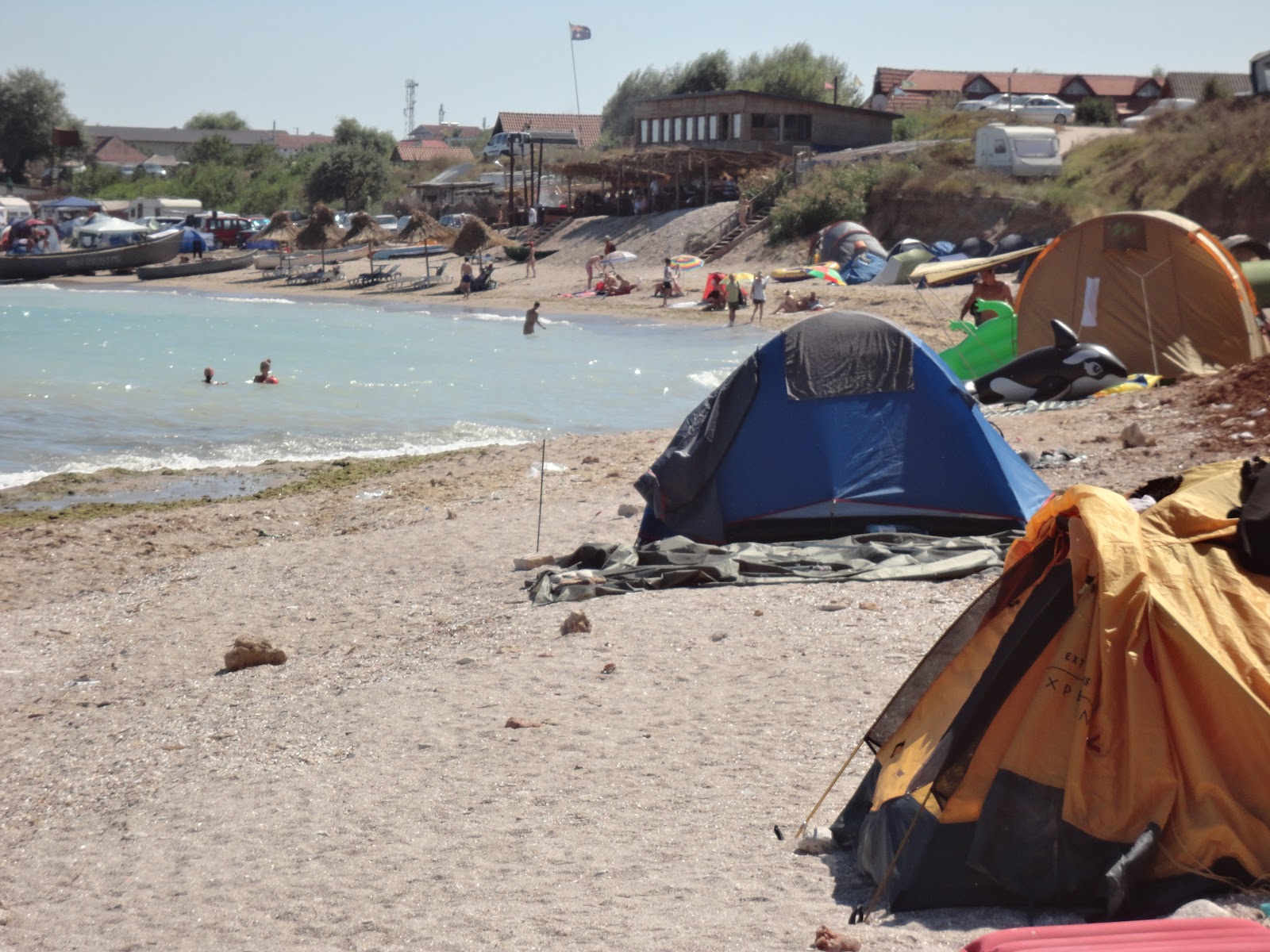
The days were spent on the beach in all meaning of the phrase.  Laying out, reading, swimming through waves and against currents, and of course putting down some cold refreshing beers were all main activities of the day.  I remembered when I was little and I went to the beach with my family.  Knowing that it would be the only couple of days that year that I would see the ocean, I took in all of the wonderful sights, sounds, and especially feelings of the beach.  Feeling the wind against your bare chest, the sand through your tows, and the waves crash into you.  The waves of the Atlantic always seemed much larger than these at the Black Sea.  Is it the difference in size of the body of water or the person standing in it?  Just like those times when I was at the beach as a kid I had to leave eventually even though I didn't want to.

The trip back to Bucharest was a tough one.  Sunday evening is not a good time to leave the beach mainly because it is the time that everyone wants to leave the beach.  After spending a couple of hours on a hot mini-bus in traffic we switched to a hot, overcrowded train to add another 3 hours to our trip.  Factoring in the travel time there and back I wouldn't go to Vama without staying at least two nights, which makes it necessary to take off either a Monday or a Friday.  I wonder if I'll be able to get back down there one more time before I leave Romania.


Tuesday, June 26, 2012

PIFF

At the beginning Peace Corps seems like one big step outside of your comfort zone.  You ship off with a bunch of new people to a place where you are injected into the local culture and you are supposed to adapt and get used to it, a thing they call integration.  The idea is that after you're integrated you can effectively function at your site and the pain of that step outside of your comfort zone wears off.  It turns out that it doesn't stop there.  In fact, that big jump out of your comfort zone is followed by a series of smaller yet similar steps out.  Maybe it is the desire for a PCV to keep things fresh or it could be the "Yes Man" philosophy to integration that pre-service training pushes.  Whatever it is, after over three years in Peace Corps this past weekend I found myself yet again stepping outside of my comfort zone to present selective collection workshop at an international film festival. 

The name of the festival is the Pelicam International Film Festival (PIFF).  The title combined the word "pelican", representing the festival's nature theme and its location at the entrance of the Danube Delta, and te work "camera", indicating its focus on film.  Weeks before I received a message from my colleague with the offer to go and present, as a MaiMultVerde (MMV) representative in Tulcea.  I jumped at the chance, knowing that Tulcea was on the edge of the Delta, a region that I have yet to visit.  As the event slowly approached my emotions gradually lifted and I spent the four days leading up to the event studying selective collection and MMV's stance on the issue.  Taking on this particular responsibility was a jump out of my comfort zone for a few reasons. - 1) I am no expert on the topic of collective selection but I will probably be seen somewhat as one. 2) I'm not a great public speaker and though I can usually handle myself in front of a crowd its a different story in another language(that being Romanian).  3) Though I found myself on a bus to Tulcea with a bunch of other "invitees" I did not know any of them.  4)  Finally, I prepared a nice presentation that included a short documentary produced by MMV in 2010 but it was supposed to be a "workshop", not necessarily a presentation, whatever that means.  Despite these measures that worked to raise my level of anxiety I knew one thing that I have realized more in PC than anywhere else which is that "what doesn't kill you will make you stronger" and I figured that the experience would be a valuable one that I would learn from.  

It was the first edition of PIFF and after arriving, getting settled in, visiting the venue and speaking with the organizers I had the sense they were quite nervous about how everything would come off.  Despite this sense of nervousness, from the beginning the festival seemed well organized.  There was a photo exhibit in the lobby, there was already information available about the festival and its program, there were posters all over town, I was able to get into the workshop room a day early to check out the room and test the equipment.  Already, after the first couple hours of being in Tulcea I felt more comfortable about presenting and I felt honored to have the chance to be a part of the festival.  That evening I attended the opening of the festival where a great movie about the Bolivian water wars, Tambien la lluvia, played to mark the start of a nice weekend of films highlighting environmental issues.

Tulcea is an old port city on the Danube dating back to 7th century BC.  It is the take-off point for anyone wanting to venture into the UNESCO world heritage site, the Danube Delta.  Tulcea is also quite a diverse city with Romanians, Turks, Russians, Roma and other minorities present.  Near our hotel in the center of the city I found a set of three statues including a Ukrainian, a Romanian, and Ataturk.  The walk along the water is not an extremely pretty walk but its usually nice to be by the water watching the boats and checking out the restaurant boats parked along the water's edge.  I used the word "usually" because I found out fast on my Friday evening stroll along the water that the place was swarming with mosquitoes, so much that I preferred to retire early to my hotel room. If you go to Tulcea in the summer, limit your nice water-side walks to early mornings when it is cool and there are not so many mosquitoes out to eat you up.  The following morning I walked up to Independence Monument which provided a nice panoramic view of the city.  The monument was erected for the soldiers who fought to free the country from Ottoman rule from 1877 to 1888.  Other highlights of Tulcea include an aquarium/museum, a nice center square which hosted a concert, a film viewing from PIFF and a farmers market where I bought some smoked cheeze, and a lake on one end of the city where fishermen gather along one side and swimmers gather along a beach on another side.  Surely I took advantage of most of what Tulcea had to offer.  Unfortunately it's main attraction, the Danube Delta, I had to put off until my next visit.

The films that I caught where both entertaining and relevant.  Aside from the opening film, I caught an Austrian documentary called "Plastic Planet", my second viewing of "Gassland", a film about the wild horses of the Delta called "Gone Wild", and a short film about the disappearing Aral Sea.  The documentary "Plastic Planet" nicely followed my presentation on selective collection and it comically showed the impact of plastic in our lives by having people take all of their plastic items from there homes and put them on their front lawns.  The image of a family sitting in plastic lawn chairs surrounded by everything from toys to clothes to household appliances remains in my thoughts a week later.  I guess that's the purpose of a documentary.  I chose to see "Gassland" a second time because a debate/discussion followed the viewing focusing on the status of fracking in Romania and Europe.  It was so interesting to me that such a heated topic in my home on the other side of the world has become the same here in Romania.  Finally "Gone Wild" was shown as the festival's closing film and it highlighted a phenomenon close to home in Tulcea with the wild horse population growing in the Danube Delta. 

Once again I find myself taking a step outside of my comfort zone and not only learning and growing from it but also experiencing a new place and new people.  My emotions subsided as I had some time to chat with the small audience before beginning my presentation.  A couple of guys in the audience were especially active with their comments which led to an overall constructive discussion regarding the status, opinions and education regarding recycling in Romania.  The festival organizers were especially friendly and they helped me to get to know and get along with the other invitees as we hung out and talked until early morning hours after the festival's closing celebration.  Looking back I realize that in order to have these nice, memorable experiences you not only have to accept those invitations to step outside of your sphere of comfort but you have to also invite those invitations.  If I never let it be known to my colleagues that I would like to get down to the Delta sometime I wouldn't have experienced PIFF.

Thursday, May 31, 2012

Primavara in Petrosani


A travel opportunity arose as worker's day rolled around in Romania as well as probably all former communist states.  Worker’s day is the first of May and a national holiday.  This means that its an official day off in Romania and many people go to the seaside as it marks the opening of the season there.  It’s my understanding that if you’re Romanian and you don’t make it to the seaside on the first of May then you probably have a picnic or a barbeque if the weather is nice.  I decided that instead of descending to sea level like many people from Bucharest are doing I’d climb in elevation and head to the mountain.  Former Peace Corps Volunteer Leaders have taken time on a monthly basis to make it back to their Romanian homes where they lived and worked their first two years of service.  Unfortunately I have not followed the trend and finally I took the chance to make it back to Petrosani for the holiday. 

The decision to revisit Petro City seemed almost destined.  After visiting a few weeks ago with Wes in a depressing rain, my desire to hit the mountains only deepened.  The bitter-sweet event that is the COS conference took place in the days leading up the beautiful 1 May weekend in Petrosani and it happened in Cluj.  The location worked out perfectly as I could easily take a longer but still direct route back to Bucharest while stopping for a couple of days in Petrosani.  Monday being an extra day off leading up to the first of May and making for a 4 day weekend was the third major reason to return.  Finally the “cherry on top” was the weather, forecasting sun and warmth during the entire weekend.  It would have been a crime for me to sit around in Bucharest in such conditions. 

Cascada Lazar

The best days are the discovery days and this was one of them.  It was one of those days when you wake up in the morning knowing “x”, have had these “y” experiences until now and thinking “z” about what there is to come, and when you go to bed that evening all of those values have changed.  The destination was talked about a bit, documented a bit, little more than a rumor, certainly unplotted and it was the day’s goal to find it.  The last time this happened I found myself in a field of thick evergreens pulling myself along, struggling to find a way.  Eventually the way was found, the day was complete and it remains unforgettable.  See Lacul Burtan.  This time the destination was a waterfall and though it didn’t require the same amount of struggle as Lacul Burtan, the mere fact that it was unmarked added to the adventure, which might end up preparing me a bit for those unmarked high peaks in the ADK.  The waterfall is Lazar Falls and it is located in the mighty Retezat Mountains of Romania. 

Ernest, Doamna Grecu and myself were back at it again like we were during so many weekends when I was residing in the small miner/mountain region of Romania.  This time Doamna Grecu’s son who has a passion for photography joined.  It isn’t hard to find someone in the Jiu Valley that has a passion for photography as there are countless places and moments in nature there that you simply must immortalize in a digital file.  See the “stories in picture form” link list to the right.  The last major hike took place in the same region, the southern edge of the Retezat Mountains.  Though they are not the highest peaks in Romania or even in the region, some of the most beautiful sights that I have experienced have happened there.  The snow-covered peaks shined brightly in the morning sun but where soon forgotten when the road thinned out and we were following a stream up through thick forests. 

The central point of the hike was a grass covered bridge that somehow had a boulder fall down on it, taking a large chunk out of its far left side making it impassable by car and leaving the upper half of the road just for those on foot.  If only there were more bridges like this one that the mountain declared war on, leaving even more wild places for those willing to get out of their mobile rooms and feel the rocks under the soles of their shoes.  Throughout the day the bridge served as a resting spot, a water refill, a seat, a kitchen table, a bed and a crossroads.

First we crossed the bridge choosing the path that led us to our destination, Lazar Falls.  The waterfall was about 15 meters high and after a short struggle we found a good spot to take some photos from.  While the other guys where taking photos I decided to explore the area in search of an overhead view.  The view I didn’t really find but I did make it to the other side of the waterfall where the trail seemed to end.  We decided that there must be more but maybe in another direction so we returned to the grass covered bridge to eat lunch and consider another route. 

After lunch we headed up another stream by the bridge.  That stream took us over some rough terrain and before going too far we found a small waterfall to rest at.  The group decided to call it quits there, rest and head back but there was talk of a higher waterfall somewhere in the area.  In my experiences with waterfalls in the great finger lakes region of New York State, you might find a couple small ones here and there but if you keep heading up the river it is very possible to find a large impressive one.  I saw a curve in the river not far up and while the others were resting I decided instead to explore.  Just beyond the curve there was a series of 3 small waterfalls with a fourth large waterfall following.  After catching a closer look I noticed that the forth one, though hard to get to, was even higher than Cascada Lazar.  I think it is what others on forums called Cascada Maria. 

Following my discovery I returned to the group to report the findings but eventually we ended up descending down to the main road to end my first of three hikes this springtime in Petrosani. 

Cascada Lazar was on a Saturday.  Sunday and Monday I participated in hikes that I have done before but really enjoyed.  Sunday hiked in Parang on one of my favorite trails which took use to a ski area, a large rock where I took a nap and a descent past sheepfolds.  The views of Parangul Mic from Partia Slima on a sunny spring day are amazing when the top of the snow capped peak shines against the light blue sky.  Monday’s hike took us to up to Straja with a decent down Braita.  In a few locations along the trail downed trees presented an obstacle.  These trees along with the steep descent, uneven trail and heavy leaf coverage made for a slow, exhausting hike.  Despite our challenges it was a great day of hiking through the forest alongside waterfall after waterfall.  We exited the forest joining the number of groups of barbequers out to get a tan and spend some time in nature on their day off.  It was the Monday before May Day, a long weekend and a beautiful day when we stopped for a much appreciated beer at a small cafe just off the trail. 

Once again springtime in Petrosani doesn't fail to impress me making springtime my preferred season of the year.  

Sunday, April 22, 2012

Discover Transylvania 2012


Transylvania is a true gem in Europe.  The word means “the land across the forest” and this could refer to its geographical location as a plateau nestled in the backwards “L” shape that the Carpathians make.  The highest range of the Carpathian Mountains (Fagaras Range) makes up much of Transylvanian’s southern border but the region’s eastern, northern and western borders are all defined by high peaks.  It may be that Transylvania’s folklore and its popularity in Bram Stroker’s Dracula are what bring tourists to the area, but what those tourists find there is much more.  They find beautiful villages nestled in valleys between hills or mountains, old cities with medieval architecture, fortified churches and friendly, easy-going people.  When I was presented with the task of showing Romania to one of my best friends, Transylvania was, hands-down, the region I wanted to display and at the same time, revisit. 

Day 1

The early morning train wasn’t all that early.  The plan was to catch the 6:30 Regio to Sinaia but in the morning the later 11:50 InterRegio seemed like a more attractive option.  The train slowly crept out of the city past the long lines of identical blocks and walls decorated in the same graffiti that was there 3 years ago.  The country-side quickly swallowed us whole as we passed by villages with their houses, courtyards, dogs, dirt roads and villagers.  Poverty is easy to see when just leaving the city. Houses nearly falling over situated a stones-throw away from the brightly colored walls surrounding a large home and a Mercedes.  These scenes display poverty not only in the lack of material wealth but also in the lack of class.  Somehow we barely noticed passing by our first stop, the large city of Ploiesti with its oil refineries situated to the south and east of the city while the north of the city looks toward the foothills of the Carpathians.  This city was once the target of a major bombing campaign by the Allied forces in WWII called Operation Tidal Wave.  Suddenly our faces were glued to the window as faces tend to be when you’re in a train and the mountains begin to rise up around you.  Soon we were at our stop, Sinaia.  With our large packs we made our way off the train into a chilling mountain air. 

Sinaia, though a beautiful location, was a bonehead decision by the trip’s planner (myself).  Sinaia was chosen over it’s neighbor Busteni because it features one of the nicest museums in Romania at the best preserved castle in Romania, Peles.  Busteni, on the other hand, features some great hiking with incredible views.  The bonehead decision was that the trip’s planner deciding Sinaia because of the museum, disregarded the fact that Day 1 fell on a Monday when all museums in Romania are closed.  Either way the short hike up to the castle allowed for some nice views of the town’s architecture and monastery.  We were able to hang out in the courtyard of the castle for a while and walk around its grounds before retreating back down the hill with a bar of nuga and a beer waiting for us at the bottom.  Following the beer we made our way back to the train station for the day’s second leg to Brasov. 

After passing by the beautiful Busteni the mountains the train began to descend until finally we entered the city of Brasov.  Hungry and with heavy packs we hustled around town searching for hostels.  The two hostels we had written down on paper were disappointments.  Both hostels were located in the center and both offering not much other than a number on the door.  Finally after doing some more searching I looked in my pocket to find a flier that one man at the train station shoved into Wes’s hand as we quickly passed him.  It was the flier for the hostel Kesmet Dau.  We were in luck as the hostel had cheep beds and one free drink included. 

Day 2

The second day began with a nice conversation about traveling and being in foreign places with our fellow hostel goers.  A couple of Canadians, Americans, a Brit and a lone Swedish gal made for good morning conversation before heading out.  The days discoveries began with a hike to Tampa, the peak that rises sharply out of old town Brasov that takes you up to the cities very own version of the Holleywood sign.  Views from the peak reveal Brasov and beyond on one side and the snow covered Carpathian peaks on the other.  The hiked looped back down the hill through the forest ending at one end of Brasov’s southern wall were our old city walk began.  That walk took us to the major sites of the city gates, rope street, the square of advice, the black church, the northern wall and finally lunch at a basement restaurant.  From there we returned to the hostel to grab our bags and move on to the next point of interest, Sibiu. 

Day 3

Our host gave us some great advice the night before which led to my favorite part of the trip.  It was the second to last nice day of the trip and we spent it walking from village to village over beautiful Transylvanian landscapes.  Starting in the nearby city of Cisnadie we perused a couple second-hand stores and made our way to the center of town where we circled the beautiful fortified church.  An old local man led us to the edge of town showing us the old dirt road to our next destination.  Passing a flock of sheep through an orchard we spotted the next fortified church in the distance.  The fortress at Cisnadioara is situated high up on a steep hill at the edge of a small village.  On our way up the hill we spotted some deer and at the top of the hill we spotted an amazing landscape viewing Cisnadie in the distance and the mountains to the south. 

After asking the locals for directions to our next destination we were sent up an old wagon road that was hard to follow at times.  Just after crossing the hill’s peak we could see Rasinari, the dream site of a fellow volunteer.  On our way down the hill we spotted some donkeys grazing and a hawk swooping down by the forest.  The town was pleasant to walk through with its dirt road splitting the bright colors of the houses lining it.  We met with the volunteer in the center of town were we picked up some lunch supplies.  After a good chat and some grub we decided to take off back to Sibiu where we hung out with our great hosts at restaurant in the beautiful small square.  

Day 3
Tour of Sibiu.  It’s high walls, old churches, squares large and small and rich history we filled our day which included a trip through the Birkenthaul museum where our host was working.  What’s Europe without visiting at least one museum?  The day was pleasant but you could feel it getting colder and cloudier.  The next day we would be back on the road after three nights in Sibiu and we were hoping for some decent travel/hiking weather.

Day 4

Decent weather we did not get as we woke up to snow and then heavy rain.  The weather stalled our departure from Sibiu but eventually we got out the door and on the road to Deva where you can see the fortress on the hill shooting up out of town.  The fortress was nice but the burrito at Pizza Grande was better.  I was quite familiar with Deva already being that it was my transportation hub for traveling in the northern and western parts of Romania for the two years of staying in Petrosani.  The maxi-taxi ride that I’ve become so familiar with put me to sleep and suddenly we were surrounded by mountains again descending switchbacks, back home in Petrosani.  My good buddy Dragos picked us up at the bus station and we spent that evening first getting some food with some of my best friends in Petrosani, Leddy and Dan, and then returning to Dragos’s for a good evening’s conversation.  Unfortunately, visiting was the extent of our trip to Petrosani.  The weather hindered our main purpose for visiting my second home, hiking in Parang.  Due to the weather we cut our Transylvanian adventure short a half day by taking the day train back, but not before we took some time to visit with Ernest.  Six hours of train and we were back in Buc to meet some friends out for a nice night in Lipscani. 

Conclusions:

Transylvania is a pretty face of Romania but not the only face of Romania.  Traveling through Transylvania was a good idea and it showed my buddy a great/beautiful part of Romania.  We hung out with some friends, met some interesting people and talked to quite a few Romanians that had some interesting things to tell us about the history of the country.  Despite all of this, it was great that Transylvania is not the only part of Romania that I was able to show my friend.  Spending a couple days at the beginning and end of the trip allowed us to do some discovering in Bucharest as well.  I’m sure that Wes learned a bunch about Romania and saw many new things but I also learned quite a bit as this was the first time I took a look at both parts of my Peace Corps service: service as a PCV in Petrosani and service at a PCVL in Bucharest.    

Tuesday, December 27, 2011

Ignat


            It’s that time of the year again.  The city is lit up, the nighttime air is spiced with cinnamon and cloves as the steam rises out of the warm glasses of wine, venders all around town are pushing goods of all shapes and sizes into the faces of eager consumers, and in the thousands of small villages peppering the countryside of Romania, pigs are dying.  “Ignat” takes place on the 20th of December.  The word “Ignat” is actually the Romanian version of the name Ignatius and like most things Romanian, the 20th of December has religious significance.  Even though the 20th is the feast day of Saint Ignatius of Antioch the word is synonymous with the annual pig slaughter because of its convenient timing, 5 days before Christmas.  There’s just enough timing in between Ignat and Christmas to get the meat checked and ready to feast on after the long Christmas fast.  Due to the busy week schedule, the onrush of capitalism and the slow fading of tradition, the annual event of “Ignat” no longer actually takes place on the feast day of Ignatius, unless of course that day falls on the weekend.  This past weekend was the weekend before Ignat, and even though blood was spilled the courtyards of many country homes, good food and drink were offered in remembrance of the pig freshly slaughtered.

            It was about 9:30am on a Sunday morning in a small Romanian village that bears the name “Valley of the Monks” when three PCVs stumbled into Nico’s courtyard awaiting the feast day’s events.  The PCV’s were late and they had missed the actual killing of the pig.  They halted shortly after entering the gate with eyes fixed upon the scene.  There was an older man and a younger man each with torches in one hand and a knife in the other, burn scrape, burn scrape.  Despite their seemingly carelessness of where they set down their torches, it was clear that this wasn’t their first hot dance.  They were pros, and this was just one of their many pig slaughters of the season.  Soon after arriving, our host, busy with preparations of sorts, came out of the house with a large welcoming smile across his face.  In one hand he was holding a steaming pot and in the other he had a large tray with mugs.  After clearing off a spot on the nearby table he began to pour the not so clear liquid into the mugs and handed them out.  A morning cheers quickly followed and then we drank.  It had been two years since I had tasted tuica fierta and I had forgotten how much I had actually liked it.  My last taste of the drink took place at the same time of the year, while watching another pro clean a recently butchered pig, several hundred kilometers to the west.  Meanwhile, looking around the group I noticed that the one of the men working on the pig put his scraper down for his glass of tuica.  Tuica in one hand and a torch in the other, drink, burn, drink burn. 

Grandma cleaning out the intestines.

            After burning the hair off and cleaning and salting its skin, the men methodically began taking the pig apart starting with the head.  The first cut was the traditional cross cut in the head of the pig, reminding those present that they are thankful to God for the large healthy pig on the table.  The pig started as a 200+ kg mass on a table and in about a half hour all that was left on the table was one last flat slab of flesh.  I watched them pull the different parts of the pig off while standing next to my friend Jeremy who has a passion for food.  As they pulled off each part he explained what it was and what it is used for in the culinary world.  For him, knowing his way around food, it was obvious that seeing the slaughter was an interesting experience.  Meanwhile my other friend Aron was carefully documenting the activity by taking pictures, and our host Nico was lending a helpful hand to the professionals cutting the pig.  After all, it was all his meat.  Aside from the group, we were accompanied by some entertaining animals.  Between watching the butchers and chatting with Jeremy I was noticing the cats roaming around the scene slopping blood up off of the cold concrete.  Despite how domesticated an animal can be there are still instincts that kick in.


Pomana porcului was the culmination of the day’s activities.  Pomana porcului is the meal that the host offers those present who helped out with the slaughter.  Even though we didn’t help out very much we were guests and therefore we became direct beneficiaries of the delicious food served.  The meal consisted of some of the meat taken from the pig recently killed fried in fat from the pig.  There was also mamaliga, tuica and wine served, all products produced by the host.  Despite the cold, the meal was served at a table in the courtyard.  After enjoying the meal we continued to sit and enjoy the day and our great host Nico who brought out a pair gloves that he used to box with.  Back in the day Nico was one of Romania’s star boxers.  

For me, the event acted as a reminder of the beauty of the countryside.  After spending so much time in the city sometimes I forget how much I enjoy the fresh air, traditions, and hospitality that can be found not far beyond the limits of the city.  In some cases these traditions can also be found within city limits.  I remember walking to school on a cold morning before the winter break began last year and seeing torches lit in between city blocks at my old site.  Even though last weekend may have marked my final pomana porcului, it will not be the last time I make the trip to spend the day in the beautiful Romanian countryside.  In so many places in Romania the beauty of the countryside means incredible mountain scenery, rivers and lakes, but in so many more places in Romania the beauty of the countryside means much more than that.  It is the tradition, stories, and hospitality of the people who reside there.  

 Romania, te iubesc! 


Friday, October 7, 2011

Scorota

My return to the mountains has come.  Remembering late last winter, there had been a three week period away from the mountain and I was itching to get back up for a hike in Parang.  Last Friday it had already been almost two months since my last mountain excursion.  It had to happen and it seemed to be my last chance before the cold moves in.  So I made my return Petrosani but not really.  I was in Petrosani to drop my bags off and sleep.  The rest of the time I spent like many of the weekends I spent when I lived in Petrosani, outside of Petrosani.  Excited to here about the weekend's activities, I committed to making the trip on Friday afternoon when the plan was to hike to cabana Buta.  I had only been there once and though I reluctantly dragged myself out of bed one year before to do the hike there were no regrets.  It was a great hike and it ended in a delicious meal made primarily of wild mushrooms.  Knowing what kind of scenery was in store I psyched myself up for the hike, but we never made it to Buta.

On one hour of dirty train sleep the night before, I found myself yet again struggling to fully doze off on public transportation next to my hiking buddies and a group of young mountain enthusiasts heading uphill.  We exited the minibus but only for a minute as we discovered that on demand of the large group of student customers it was heading even further up Basescu's road.  Suddenly plans changed from Buta to Scorota, from familiar and exciting to unfamiliar and even more exciting.  What is more exciting, adrenaline-pumping, fearful, extreme, than the unknown?  To me it was unknown; to my hiking buddies it was a bit more familiar.  I was in good hands. 

We quickly left the group, so we thought.  Thirty minutes of hiking and we were out of woods with cliffs rising up on our left.  Thinking it was a good time for a first break we allowed the students to catch up to us and we ended up even with them until the early snack break at Stana Scorota.  It was there that we split, my group to the right and straight up the wall while the students took their time snacking.  By the time we reached the top of the first climb (not even close to our highest altitude) the group of students was still packed together at the table outside of the stana.  They looked smaller than a group of ants crowded around a small piece of lollipop.  We continued on, finding bright fall colors surrounded in evergreen, endangered wild-flowers (edelweiss), more climbing, and more students.  A large group of students were coming down as we were heading up.  They were students from the same Petrosani high school as the students we met on the way up.  Imagine having monthly mountain trips in a high school club.  Do these kids have a clue how lucky they are?  Does anybody?

Eventually we reached the highest point of the day at Varful Puiule but not until we saw an amazing view of the Retezat high peaks.  The descent consisted first of beautiful views of a lake in the distance, vibrant clouds, and steep rocks rising on our right.  Unfortunately the trail was poorly marked and there was a section where the attentiveness of three hikers was necessary to keep it, until it was lost.  After it was lost we bushwhacked down a steep, fairly dangerous slope through the woods to some water and eventually a forestry road.  The bushwhack descent at the end of the hike sucked.  Mental note... don't expect people to "leave no trace" if you can't manage to mark a trail.  The wonders of the hike as a whole farley outweighed that last miserable hour.


The combination of a sleepless night followed by a 10 hour hike led to a great nights sleep only to lead into yet another amazing day of hiking in the Parang Mountains. 

Thursday, June 30, 2011

The Floral Calendar


Spring was welcomed with open arms in the Jiu Valley this year. Months of cold darkness had taken their toll, dragging out much longer than the year before. Though it came late, the spring’s beauty was anticipated. It was only one year earlier when I had “stopped to smell the flowers” rather, “stopped to know the flowers”. All those weekends spent outside of my close quarters helped me realize just how beautiful spring is. At this point, if someone was to ask me what my favorite season is it would be an easy answer.

The late coming of spring didn’t throw off its regularity. Nature doesn’t follow a calendar of days but rather a climate calendar and even though the warmer weather may come a couple weeks later it still comes in the same way it came last year. You can observe this phenomenon by watching the flowers. I am a beginner but even my second year into it I could see the constants. My hiking partner has been observing this area year after year since the seventies when he first set foot in the Jiu Valley. This weekend you’ll see flower “A” and next weekend flower “B”, he would say. For the most part he was right.

The first to pop its head up out of the soil is the ghiocei (snow drops). Ghiocei are used as a symbol of the coming of spring and given to ladies on March 1st. The second flower to appear is the brandusa (crocus) and in my experiences it is found at higher elevations. A couple weeks after the brandusi first appear a trip to Oltenia is in session to find a flower native to few places in the world, lalele pastrite (dotted tulip). Lalele Pastrite is a tulip which droops its heavy purple head down toward the swampy land that it grows on. The narcise (narcissus) are next to appear. Fortunately in Petrosani we have access to narcise both in the low lands of Oltenia and also narcise in the Vulcan mountains which appear a couple weeks later. This allows us to enjoy the beauty of the flower in both sight and scent, for a prolonged period of time. It seems like the salcam (acacia) appears at around the same time as the narcise but sticks around longer. If you’re walking on the side of a country road and the flower hangs down within reaching distance I advise you to break off some of the flowers to give their sweet pedals a taste. The large dark blue/purple flowers of the liliac (lilac) bloom out of the country yards for a couple of weeks in mid-spring gracing travelers on the other side of the gate with their soothing scent. Finally as spring turns to summer the large white soc (elder) flowers bloom. You can’t get within 15 feet of these plants without knowing they are there. Socata (elder juice) is a popular drink in the area and it is made from the flowers of the soc, lemon, and sugar. Last year I brewed up about 5 liters of this delicious juice and for a first try I’d say it was a success.

The flowers found in the Jiu Valley are not limited to those I have mentioned. Those that I have mentioned are the flowers most sought out, but on any given day you can enter the beautiful mountain massifs of Parang, Retezat and Vulcan to find a rich variety of flowers and other plants. If you enter some of the high peak regions of the Carpathians in the summer time you may even see the protected floare de colt (edelweiss) growing on the side of the steep rock faces.

The lowlands offer some beauties as well in the summertime. Last year outside of Timisoara I remember seeing large fields of sunflowers. That explains the towers of shells that you will see from time to time on the personel trains. Last but not least the mac (poppy) is definitely worth mentioning. Cruising from Targoviste to Bucharest you see the red gem’s lining the roads and dotting the fields. Their pedals look like smooth silk being blown by the hard flat plane winds.

Wherever you are in Romania the springtime is sure to brighten your life. The sights, scents, and even tastes will abruptly break you out of that winter depression. Just be careful not to miss it. Many of these small beauties only stick around for a couple of weeks before going to sleep until next year. As springtime rolls around next year don’t waste a moment in that small living room apartment watching TV, or checking email and surfing the net. A field of narcise is just kilometers away waiting for you to breath in its miracle.


Friday, May 20, 2011

Lacul Burtan


Ernest: "You're not going to find it; it could be on the other side of that ridge up there."
Dom Pecut: "It must be close. Look how the mountain is shaped right here. We have to be close."
Ernest: "Let it go. We've got a good place to rest, eat, and then we'll turn back."

It was late in the day to finally stop and eat lunch. It was almost 4:00pm when usually lunch time is at 1:00ish. The group had threatened to turn back a few times already but there was always one person that persisted. I was never that person. Those who know me know that I'm not really a decision maker when I'm in a group. When Doamna G or Domn P persisted I quietly followed thinking that we would not end up finding what we were looking for.

What were we looking for? Hours earlier after an easy 45 minute hike on a gently sloping forestry road the veteran hikers of the group (everyone except myself) opened up the map. We could continue following the road to the shelter where we would break and push on up the mountain until we reached Tomato Lake. I had been to Tomato Lake only once on my way down from Parangul Mare. The other option was to turn up the hill to the right following a dry stream a few kilometers where we would hopefully find a lake. It was a new hike for all of those involved and Ernest went first blazing the trail up the steep slope.

It didn't take long to arrive at a small dam. Where there's a damn there must be a trail that transported all of the equipment. We didn't find that trail but continued on up the hill. The next major find was a large waterfall. Domnul P called it the Niagara Falls of the Jiu Valley because it was the largest waterfall that he had yet seen in the area. The beauty in both the sight and sound of the waterfall was reason enough to take a long break. On my right there was a multi-level waterfall with large rock walls on its right side, and the view to my left was a ridge across the valley that climbed up to a saddle eventually leading to Romania's fifth highest peak. You could look across and see where the pine forests ended opening up to an alpine meadow. Lying back on that grassy wall I could feel the warm morning sun on my face. There aren’t many better places to be at 11:00am on a Saturday morning.

Soon after reaching the top of the waterfall the forest opened up to meadow. The view took me back to the first day in Retezat on our way to Lacul Gales exiting the forest and looking up to see high mountain peaks ahead in the distance. Up ahead in the distance we saw a waterfall surrounded by dark green. The dark green was the color of a thick juniper forest and after a half hour of following the stream it stopped us dead in our tracks. We entered the juniper and after about 15 minutes of walking branch to branch pulling ourselves through the thick forest I had already had enough. Looking up over the trees I could see only the dark green forest surrounding the waterfall and no sign of a lake. Looking up at the mountains I thought that the lake could be up above that waterfall, but it could also be much higher. There was no guarantee that crawling through the mess of thick branches would result in reaching our destination, plus I was getting hungry. I wasn't the only one who wanted to turn back. Both Domnul E and Domnul P were showing signs of doubt but Domna G decided for the group to keep going. She wanted to get up above that waterfall to see what was there.

Another 20 minutes of hard hiking and we exited the juniper on the right of the waterfall in a small open spot in the forest. Doamna G went ahead and we witnessed her from far away as she searched for a trail and eventually climbed up a rock face disappearing back into the Juniper forest above the waterfall. We decided to follow. The rock face was fun to climb. Even though the juniper was hard to climb through even the smallest of branches will bend without breaking. You can count on them to resist as you pull up through them at the top of a steep rock wall. Unfortunately the rock led straight into an even thicker section of juniper. Eventually we found an open spot were we could sit, rest, and declare defeat before turning back.

While the rest of us were resting in the sun Domnul P insisted that the lake must be close. The rest of us doubtfully watched as he left his bag behind and entered the thick woods continuing to search. Sure enough it wasn't 10 minutes later when we heard the next word from Domnul P. "I found the lake" he yelled. The voice didn't seem like it was too far away. I looked over at Domnul E and the statement hadn't fazed him. He didn't believe what he had heard but Doamna G and I were much more trusting of Domnul P. I was next to enter the woods in search for the lake in the direction of Domnul's voice and sure enough I arrived at it. After hours of hard, slow hiking, finally the lake abruptly opened out of the dark green juniper. Back at the lunch spot I asked Domnul P what made him so sure that the lake was there. "I noticed by the shape of the mountains here, the sound of the stream, the location of the waterfall, it had to be here." Maybe after years of doing what I love, wandering in the mountains, I too will be so sure about such things.

Like most hikes the way down seemed so much shorter than the way up. We decided to ride the hill a little further away from the stream before descending. It was a steep, fast descent and we passed a viper on the way down. We were able to get close to the viper and take pictures. Apparently they don't bite if it’s cold. Walking that last 45 minutes of an easy downward slope, the rubbery sensation of muscles used all day long kicked in. It wasn't so hard to fall asleep later that night.

The word of the day was the verb "a chinui" meaning, to torture. Before moving on to the rock wall Doamna G mentioned that she didn't want to end the hike without finding the lake after we tortured ourselves up until that point.

Monday, April 11, 2011

Remembering the Great Finger Lakes region of New York State

It has been almost 23 months since I left New York state bound for Romania. They say that you don't know what you have until it's gone. That idea brings back memories of sitting around the skate park, the lunch table, or the classroom during my high school years. "First chance I get, I'm out of here," so many of my friends would say. "What does Corning have to offer me? Its too small. Everybody knows your business. There's nothing to do here." There arguments were pretty convincing. Their dreams of bigger and better places would get to me at times, especially on those rainy days that we saw so much of in upstate. For me it didn't take leaving to realize what I had, just a bit of growing up. By the time I left for California in the fall of 2008, my first real move out of the region, I was fully aware of all the great things that my part of the world had to offer.

It was during the college years that I got out and learned to love the great Finger Lakes region of New York. In the summers I held various jobs. My last two summers in town were spent working in museums where I had the chance to speak with outsiders and promote the beauties of my small little town. Friends and I would eagerly await the weekend when we would go to some of the great bars on market street or take evening bike rides. Some of the best times were when we had a common day off to trip it to Ithaca where we would discover one of the state parks, sit by the lake, or walk slowly through the commons. I can't give enough credit to the grad student at Cortland that offered me my first backpacking trip to the Adirondacks nearby. My finger lakes places were Ithaca, Cortland, Watkins Glen, and Keuka College where I visited Colin on a number of occasions.

During my time in Romania memories of those beautiful state parks have come frequently to put a smile on my face. I live in a part of Romania that has much of its own natural beauty. When I moved in with my host in Targoviste I was prepared with a picture book of the Finger Lakes region to give to them as a gift. As my parents were putting together a box of things to send me and they mentioned giving something to Ernest, that Finger Lakes picture book was the first thing that popped into my head. He loves being in nature and taking pictures of nature. "Rain or shine it's a sin to stay in the house all day," claims Ernest from time to time. As the region I live in now sits at a higher elevation than the one I left in New York, my outdoor adventures typically yield different views and a different feel. This past weekend Ernest took me on a new hike. (After a year and a half of going on hikes whenever I get the chance, there are still new trails to discover here.) This latest hike reminded me most of those gorge trails that I saw so much of in my college years.

It started out like a lot of other hikes that we've done. Really the first half of the hike I've probably done 8 or 9 times. There was a bus to Lupeni, a quick spin through the piata (market) and a 3-4 hours of walking up hill to Straja. The hike up actually follows stations of the cross. The first station is right outside of Lupeni and the final one is at the small church up at the ski area. With a number of switch-backs along the way we would periodically enter in the woods to take a shortcut. Along the way we stopped at a spring that was covered in leaves from the previous fall. I brushed the knee-high pile of leaves out of the way to fill up my bottle. Like every other trip to Straja we entered the first cabana on the right where we sat, rested, and chatted over a drink. Up until that strawberry banana juice things had seemed just like they always had, aside from the strong wind gusts. This area of Romania is pretty well protected by the mountains and therefore we do not get a whole lot of wind. During this particular hike the wind was the strongest that I have seen it in the Jiu Vally.

After our drinks the adventure began for me. We entered the forest on a new trail, going in a new direction, and I was excited to see some new things. It wasn't long before I noticed that that particular trail was quite steep. Not many people know about that trail which it is evident, as it was not always easy to find our way even though it was marked quite well. It took about 45 minutes to get to our lunch spot. Just before the lunch area we climbed down a steep part of the trail where I was forced to use both arms and legs to ensure my stability. Those are the parts of the trail that I like the most. The lunch spot was marked by a wooden table and bench that, despite their weight, had both been blown over due to the strong wind gusts that day. We sat there bundled up, our plastic bags weighed down, eating our slanina, onion, and bread as the wind beat against our backs.

The couple of hours of hiking after lunch led us through the forest and back to Lupeni as we came out near the chair lift. During those couple of hours I was reminded of the Finger Lakes region more than I have been yet in Romania. There were no large lakes nearby but the trail ran along a steep slope parallel to the stream below. The steep rocky slopes running along-side the stream with its waters cutting through rocks and tumbling down into open pools all reminded me of the gorge trails of Rock stream, Truman, and Buttermilk. After our lunch break the trail continued down a steep slope and across a small bridge over a stream. A little further down the trail we stopped and looked back to view a waterfall. Looking back upstream there were two more waterfalls in the distance that we had already passed without realizing. Following that stream a little further we came upon a larger stream with an even larger waterfall standing at about five meters in height. The next resting stop was about 45 minutes of slow hiking away. The red point trail followed the stream but we were forced to move at a slow pace due to the leaf coverage on the trail. There were parts where the leaves were several feet deep with rocks and branches hidden underneath. Eventually we arrived at a spot where the red point trail turned uphill circling back to Straja.

After a short break of eating delicious kiwis we continued on as the trail followed along-side the stream high up on the slope. We climbed over rocks, under branches, along steep slopes and finally we passed through a tunnel to the finish. Periodically we looked back to see the stream with its pools and waterfalls each time taking me back to the great Finger Lakes region of New York State.